Behavioural science, data and technology, delivered through people.
Learning sticks when it is designed for the day after the workshop. Three ingredients make that possible, and the people around the learner bring them to life.
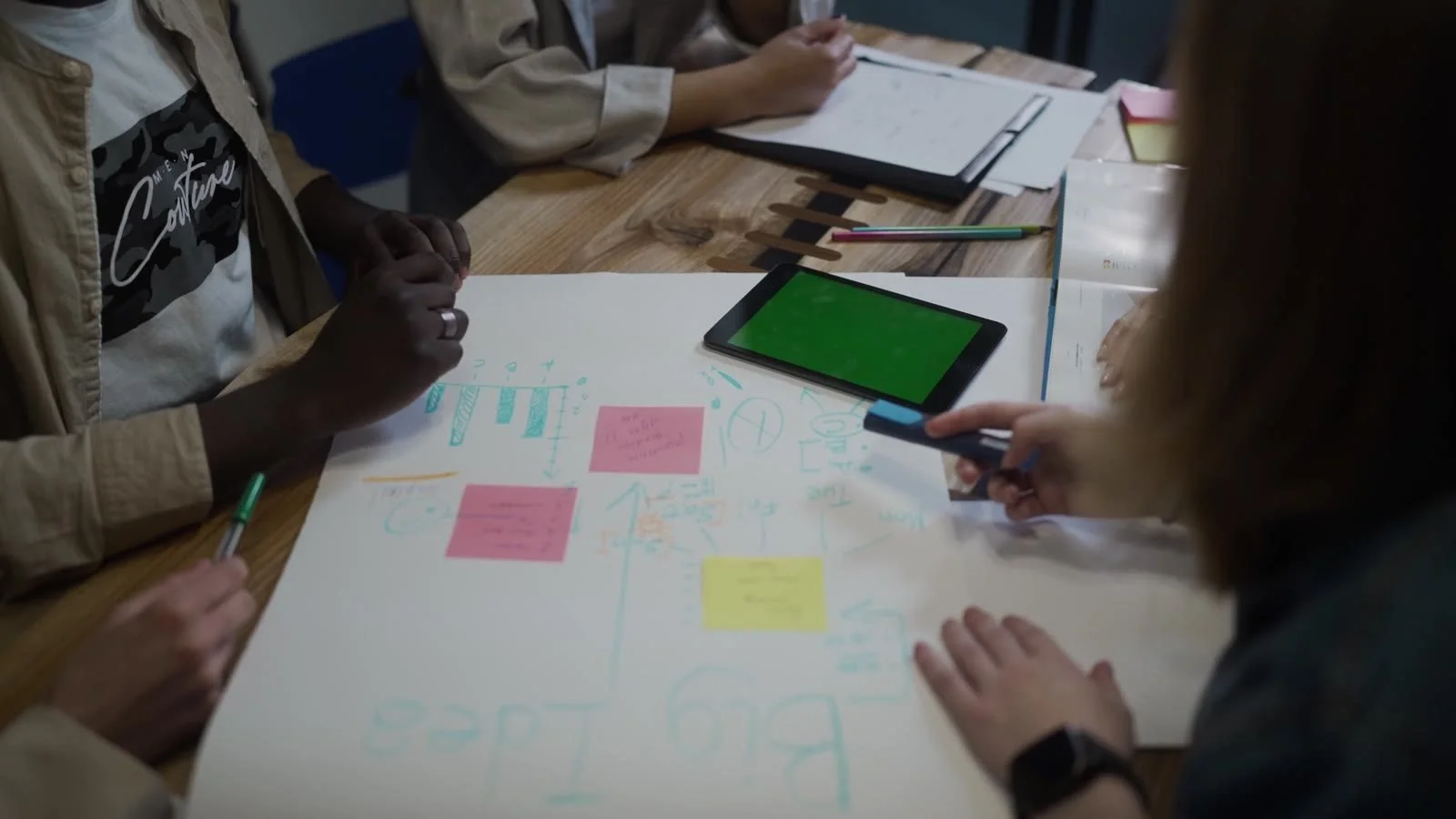
Three ingredients turn knowledge into practice.
Behavioural science
People adopt what they help build. We leave some useful effort in the design, give ideas a name teachers remember, and work on motivation and technique together.
Data
Short, regular observations show what people do, and the pattern across many of them shows what to recommend next. Light signals tell us within weeks whether a programme is working.
10,000+ classroom observations
Recommendations matched to each person
Technology
We use the channels people already have: chat apps, basic phones and weak networks. Our tools serve the coach and facilitator, so expertise travels further.
Chat-app delivery on Telegram and WhatsApp
A-Box coach app
Wagtail data platform
About 80% of a programme can be standard; the other 20% has to be tailored to language, region and background. That 20% is where most of our design effort goes. Source: WISE Summit panel notes, 2021
Each one works through people: the coach who follows up, and the peer group that expects you back next week.
One method, four models, many programmes.
Every programme we run is assembled from the same parts, which is why lessons from a classroom in Addis Ababa carry to a ministry or a health post.
Method
Behaviour, data and technology, through people
Models
Coaching, microlearning, learning communities and human-centred research
The four models, and where we have used them.
| Model | What it is | Where we used it |
|---|---|---|
| Coaching | Regular observation, same-day feedback, monthly goals and peer sessions; includes supportive supervision and training of trainers. | TeachEasy, Teacher and Leader Foundry |
| Microlearning | Short lessons on chat apps, videos of three minutes or less, and content sent before live sessions so time together goes on practice. | SIWI Flamingo, Parentsy |
| Learning communities | Peer groups with a rhythm: daily prompts, live sessions and local facilitators who keep members coming back. | Textile learning community, Flamingo peer sessions |
| Human-centred research | Time with learners, trainers and managers before design, and testing with real users as it develops. | TeachEasy origins, Simple app user testing |
How a programme runs with us.
Diagnose
Find out why practice is or is not changing, with the people involved and the data you already hold.Design
Turn the curriculum or manual into short lessons, practice tasks and coaching loops that fit a working day.Run
Deliver cohorts and communities through local facilitators, reading adoption signals as we go.Hand over
Prepare your coaches and trainers to lead, and leave the playbooks, content and tools with your team.
We use AI where it helps people do the work, and we make sure it gets used.
AI can now write lesson plans, answer a teacher’s question at midnight and score a classroom recording. Those are real gains.
The gap we see is adoption: tools that teachers, coaches and officials try once and drop. Our work is the routines, coaching conversations and peer groups that turn a tool into daily practice, alongside the platforms that build them.
Six lessons from building learning in hard places.
What ten years taught us about cost, buyers, services, adoption and technology, and how each one applies now that every tool comes with AI.
Cost > Quality
B2B > B2C
Services > Product
DIFM > DIY
Teachers > Tools
EDtech > edTECH
Let’s design for the day after the workshop.
Tell us about a programme that needs to last. We will help you find the right place to begin.